

Safest Sport for Kids in Malaysia: 8 Reasons Why Swimming Is the Smartest Choice
Introduction
The safest sport for kids in Malaysia is not always the most obvious one. When parents choose a sport, safety is almost always the top concern. In Malaysia, where children are exposed to water environments from a very young age, that concern becomes even more important.
Football, gymnastics, martial arts, cycling, and athletics all offer benefits. But they also involve impact injuries, collisions, falls, and long-term strain.
Swimming, when taught properly, stands apart.
In fact, swimming is widely regarded as the safest sport for kids in Malaysia because it combines low injury risk, controlled environments, and real-life survival skills.
This article explains why swimming is uniquely safe, how it compares to other sports, and what parents should look for to ensure swimming remains a positive and low-risk experience.
Malaysia’s Reality: Water Is Everywhere
Malaysia’s lifestyle naturally includes water. Condominium pools, hotels, beaches, waterfalls, school trips, and family holidays are part of normal life.
Yet many children are exposed to water before they are water competent.
Swimming is not just a sport in Malaysia. It is a life skill. When taught correctly, it is one of the safest ways for children to build strength, resilience, and confidence.
What “Safe” Really Means in Children’s Sports
When we talk about the safest sport for kids in Malaysia, safety goes beyond avoiding serious accidents.
A truly safe sport should:
- Minimise impact and collision
- Reduce injury risk during training
- Support healthy physical development
- Adapt to different ages and abilities
- Protect emotional well-being
Swimming meets all these criteria when delivered in a structured program.
1. Low Impact and Low Injury Risk
Swimming is non-weight bearing. Water supports the body, reducing pressure on growing bones and joints.
Compare that with:
- Football → ankle, knee, and head injuries
- Gymnastics → wrist and spine strain
- Martial arts → impact and falls
- Cycling → high fall risk
In swimming:
- Movements are controlled
- The body is supported
- Stress on joints is reduced
This makes swimming suitable even for very young children and those with weaker coordination.
2. Controlled and Predictable Environment

One major reason swimming is considered the safest sport for kids in Malaysia is environmental control.
In a well-run swim school:
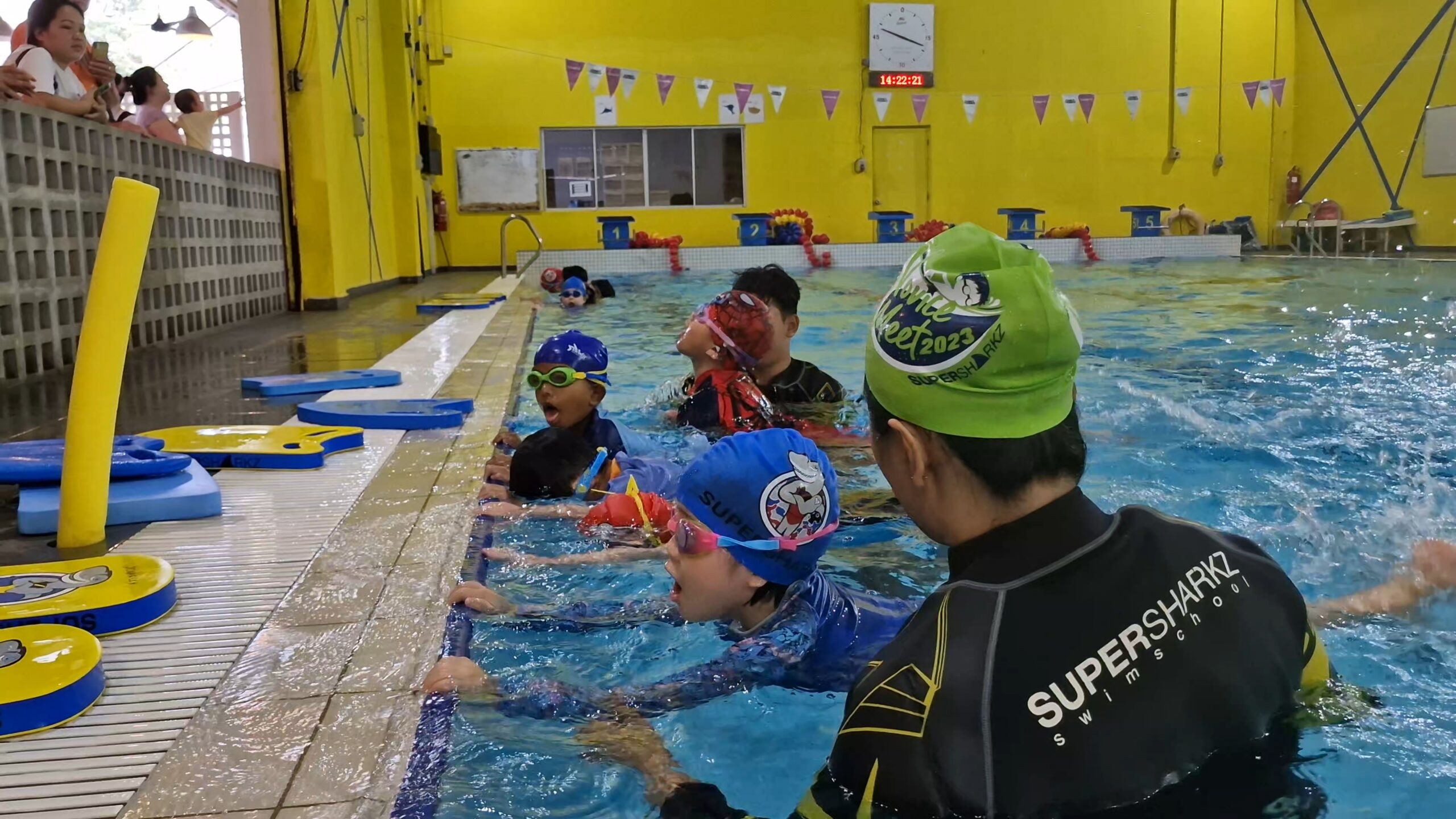
- Class sizes are limited
- The pool setting is stable
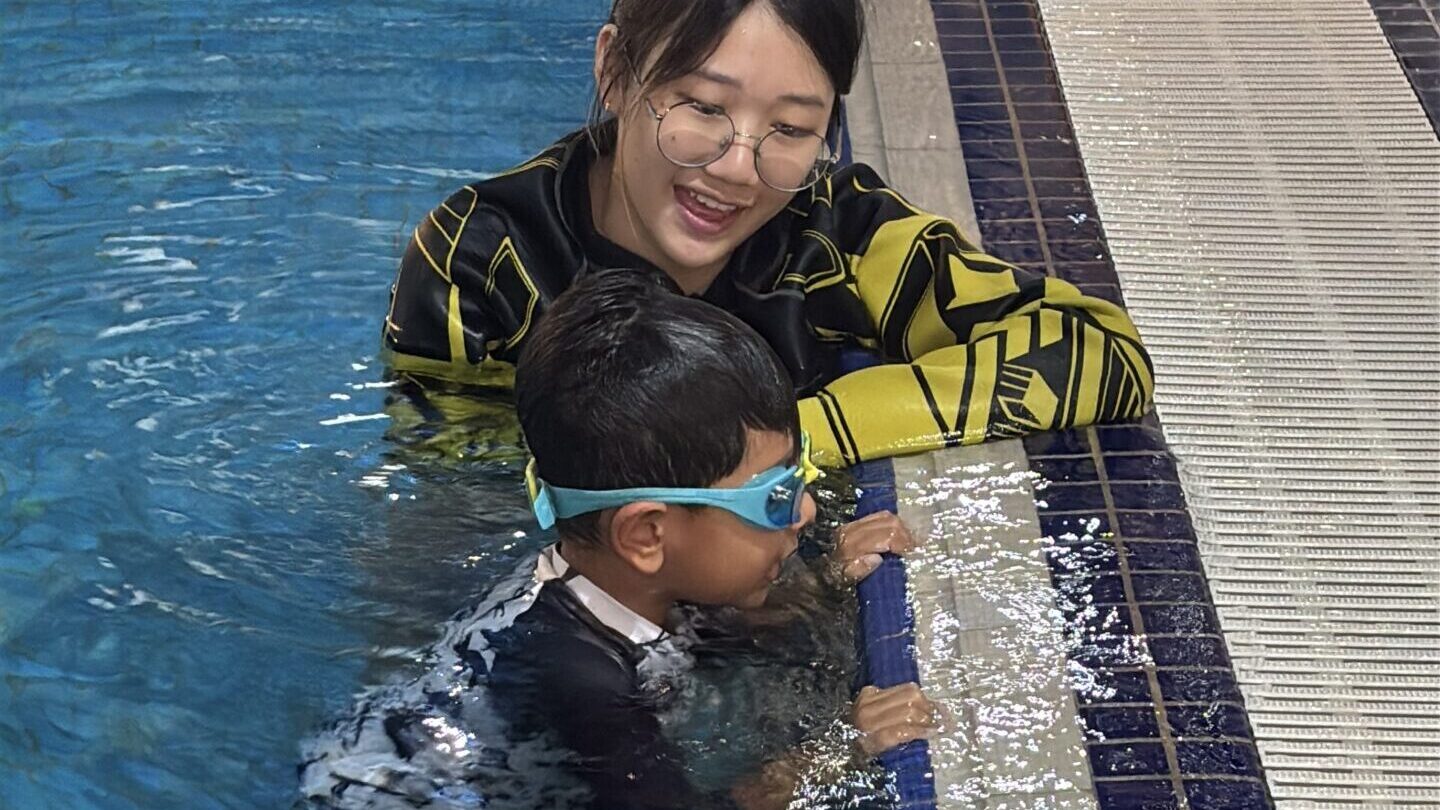
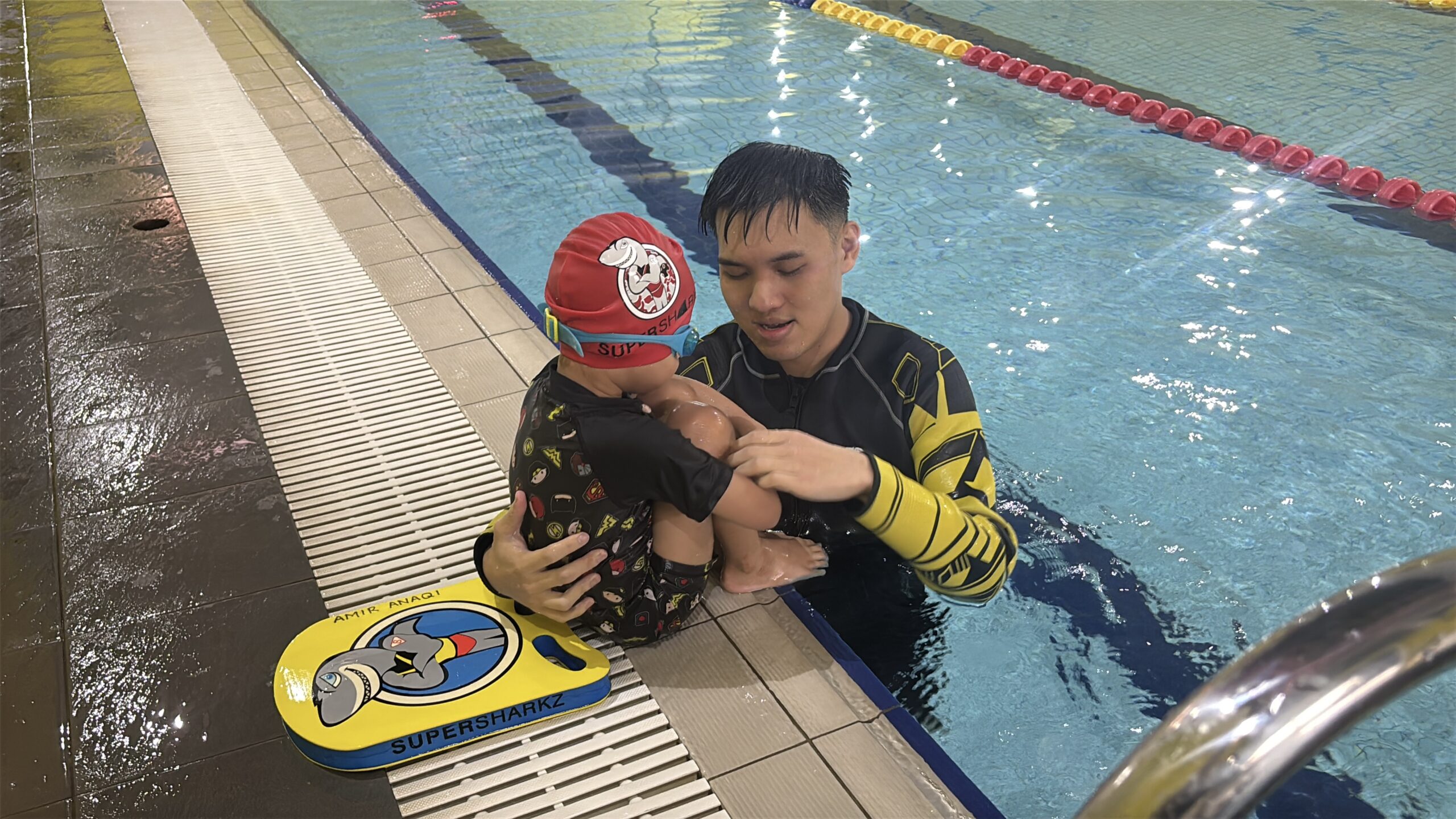
- Coaches remain close to beginners
- Risks are anticipated and managed
Unlike open fields or busy courts, swimming lessons occur in structured environments. Indoor facilities remove weather disruption, reducing unpredictable hazards.
3. Strong Emphasis on Discipline and Safety Awareness
Swimming lessons naturally teach children to:
- Wait for instructions
- Enter and exit safely
- Respect boundaries
- Listen carefully
- Understand consequences
These habits improve impulse control and awareness beyond the pool.
Few sports teach safety rules as explicitly and consistently as swimming.
4. Active Supervision
In quality programs:
- Coaches are in the water with beginners
- Corrections happen immediately
- Risks are addressed in real time
In many field sports, one coach supervises large groups moving at speed. Injuries often happen before intervention.
Active proximity supervision significantly reduces risk.
5. Emotional Safety Reduces Physical Risk
The safest sport for kids in Malaysia is not just physically safe. It must also protect emotional well-being.
Good swimming programs:
- Do not shame or shout
- Respect fear
- Build trust gradually
- Allow children to progress at their own pace
Emotionally secure children behave more calmly, reducing impulsive risk-taking.
6. Swimming Teaches Self-Rescue
Unlike many sports, swimming teaches children how to protect themselves in real-life emergencies.
At Supersharkz, right from the Beginner Swim Program, the children learn to:
- Float and recover
- Control breathing
- Orient themselves
- Move toward safety
These are survival skills, disguise as sporting skills.
In Malaysia’s water-rich environment, this makes swimming uniquely essential.
7. Adaptable Across All Ages
Swimming grows with the child.
- Toddlers build water confidence.
- Preschoolers develop coordination.
- School-aged children learn strokes.
- Teens improve endurance.
Few sports offer lifelong adaptability with such low impact.
8. Lower Risk of Overuse Injuries
Many competitive sports involve repetitive strain and single-sided movement.
Swimming uses the whole body symmetrically. It balances strength and flexibility.
When taught correctly, it reduces the risk of muscle imbalances and long-term joint strain.
View this post on Instagram
Comparing Swimming to Other Kids’ Sports
| Sport | Injury Risk | Impact Level | Safety Control |
|---|---|---|---|
| Football | Moderate to High | High | Medium |
| Gymnastics | Moderate | Medium to High | Medium |
| Martial Arts | Moderate | Medium | Medium |
| Cycling | Moderate | High | Low |
| Swimming | Low | Low | High |
Swimming stands out as the safest sport for kids in Malaysia due to its high safety control and low impact.
When Swimming Is Not Safe
Swimming is safest when:
- Coaches are properly trained
- Class sizes are small
- Facilities are well maintained
- Emotional safety is prioritised
- Progression is structured
It becomes risky when:
- Children are forced
- Classes are overcrowded
- Fear-based coaching is used
- Supervision is weak
Choosing the right swim school is critical.
Why Many Malaysian Parents Start With Swimming
Parents choose swimming first because:
- It builds coordination
- It improves stamina
- It reduces fear early
- It protects children during holidays
Swimming often becomes the foundation for other sports.
If you are looking for the safest sport for kids in Malaysia, swimming stands out.
It is physically safe, emotionally supportive, developmentally appropriate, and environmentally relevant.
Ready to Start Safely
If your child has not started swimming yet, the safest way to begin is through a structured and child-focused program.
Book a trial lesson.
Observe how coaches interact.
Look for calm, control, and confidence.
Supersharkz Swim School, Where Champions Are Born

1. Is swimming the safest sport for kids in Malaysia?
Yes, swimming is considered one of the safest sports for kids in Malaysia because it is low impact, non-contact, and conducted in a controlled environment. Water supports the body, reducing joint stress and injury risk while teaching essential safety and survival skills.
2. Why is swimming safer than football or gymnastics?
Swimming is safer than football or gymnastics because it avoids collisions, falls, and high-impact landings. Unlike contact sports, swimming is non-weight bearing and symmetrical, which reduces strain on growing bones and joints while still building strength and coordination.
3. What makes a swimming lesson safe for children?
A swimming lesson is safe when class sizes are small, coaches are trained and actively supervising in the water, and progression is structured. Emotional safety also matters. Children should never be forced, rushed, or shamed during learning.
4. At what age can children safely start swimming in Malaysia?
Children can safely start swimming as early as 3 to 4 years old when lessons are age-appropriate and play-based. Early exposure builds water confidence, coordination, and survival awareness before fear or self-consciousness develops.
5. Can swimming prevent water accidents in Malaysia?
Yes, structured swimming lessons reduce the risk of water accidents by teaching children how to float, control breathing, and move toward safety. In Malaysia, where water exposure is common, swimming provides both sport and life-saving protection.


Leave a Comment